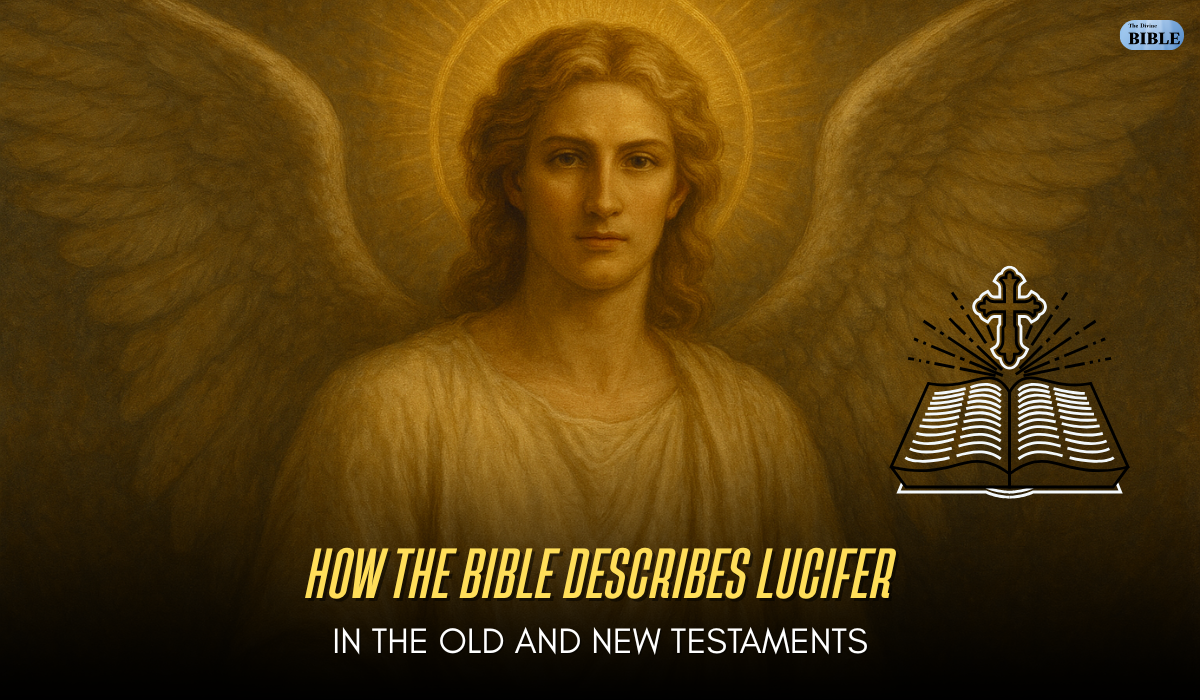
The story of Lucifer has always fascinated the faithful and readers of the Bible. There is both a direct and indirect mention of him in the scripture, and gradually, he has come to be known as the ultimate symbol of rebellion against God. What, then, does the Bible really say about Lucifer? How is he described in both the Old Testament and the New Testament?
Let us briefly analyze it through the lens of biblical history, theology, and select verses that shed light on his true nature.
Lucifer in the Old Testament
When people ask “how the Bible describes Lucifer”, most often they’re referring to Isaiah 14:12, which speaks of the “morning star” (sometimes translated as “Lucifer” in the Latin Vulgate). This passage addresses the king of Babylon, but many scholarly believers view it as a dual prophecy that might also allude to the fall of Satan.
Isaiah 14:12 (KJV): “How art thou fallen from heaven, O Lucifer, son of the morning! how art thou cut down to the ground, which didst weaken the nations!”
Here, Lucifer is supposed to have been lofty but was brought low by pride. By way of biblical history, the verse is often construed to mean that Lucifer was created with brilliance but fell from grace. This supports the idea that Lucifer, whom God had created as a powerful being, whose pride and rebellion led to his downfall.
Another important reference is Ezekiel 28:12-19, usually considered as a passage concerning the “king of Tyre” but again considered by many to be symbolic of Satan’s story:
- Described as being full of wisdom and perfect in beauty.
- Placed in Eden, the garden of God.
- Anointed as a guardian cherub.
- Eventually, pride and violent ambition corrupted him and led to his fall.
This paints Lucifer not just as a fallen angel but as one who had extraordinary power and responsibility before turning against God.
Lucifer in the New Testament
The name “Lucifer” has never come up in the New Testament, but the descriptions of Satan, often associated with Lucifer, are lucid and powerful. When someone asks, “How does the New Testament Bible describe Satan?” here are some of the prominent references:
- Luke 10:18: Jesus said, “I saw Satan fall like lightning from heaven.” This goes in with the Old Testament imagery of the downfall of Lucifer.
- John 8:44: Satan is called “a murderer from the beginning” and “the father of lies.”
- 2 Corinthians 11:14: Paul warns that Satan “disguises himself as an angel of light.” That is regarding his original beauty and lying nature.
- Revelation 12:7-9: It describes a great war in heaven, and Satan, the ancient serpent who deceives the entire world, is forced out, together with his angels.
The New Testament, therefore, speaks strongly about Satan’s being an adversary and a tempter against God’s people, a liar, and a destroyer of faith.
Who is Satan in the Bible?
Whether one asks ‘Who is Satan in the Bible?’ or ‘Is Satan real?’, Scripture answers with a continuous thread that portrays him as the ultimate enemy of God’s plan. In the Old Testament, he is considered the accuser in Job 1–2, testing human faith. In the New Testament, he tempts Jesus in the wilderness and works constantly against the early church.
The Bible shows Satan not as equal to God but as a created being who chose rebellion. In fact, God created Lucifer perfect (Ezekiel 28), but his pride led him to become the adversary we now call Satan.
Bible History and the Transformation of Lucifer
From a biblical historical standpoint, the transformation of Lucifer into Satan stands out as one of the most dramatic manifestations of pride and corruption. Once, he was a glorious angel; his desire to be on God’s footing was his downfall.
Some Bible history facts:
- Lucifer means “light-bearer” or “morning star.”
- He was one of the higher angels before his rebellion.
- The story of Lucifer is a story of free will; angels could choose to disobey God.
- Eventually, the Bible makes it clear that Satan’s power lasts only for a short while, and Revelation declares his final defeat.
Why This Matters for Believers Today
Understanding what the Bible says about Lucifer helps us keep in perspective that spiritual warfare is in daily life. The Bible says Satan deceives, but believers are to resist him by faith, prayer, and the Word of God.
For the modern-day reader, whether you are exploring scriptures on the Holy Bible app or browsing web Bible apps for Android or iOS, these passages remind us that the battle between good and evil is not some abstract concept; they really have an effect on our choices and lifestyles.
If you want to do some in-depth study on these passages, then a Best Devotional App, such as The Divine Bible App, can come in handy. It brings together Bible verses, commentaries, and study tools so you can explore the rich layers of biblical history with clarity. Whether you choose the best free Bible app or the iOS or Android variety, there shall always be a scripture ready at hand to guide and stabilize your faith.
FAQs
How does the Bible describe Lucifer?
The Bible describes Lucifer as a shining being, a cherub guardian, and an exalted morning star; his pride caused him to fall from Heaven. (Isaiah 14:12, Ezekiel 28:12-19).
Did God create Lucifer?
Yes, scripture states that God created Lucifer to be beautiful and wise, but he exercised his free will to rebel against God and become Satan.
Who is Satan in the Bible?
The Bible depicts Satan as the adversary of God and humanity. He is the accuser in Job; the tempter in the Gospels; and in Revelation, the dragon who deceives the nations.
Is Satan real according to the Bible?
Yes. The Old and New Testaments describe Satan as a real, organized being who works his influence in the world, but they also show that God limits his power and promises his certain defeat.
How can I study Bible history about Lucifer more deeply?
You can read passages like Isaiah 14, Ezekiel 28, Luke 10, and Revelation 12. Tools like the Holy Bible app or The Divine Bible App, the best devotional app, make it easy to access commentaries, translations, and study guides for a deeper understanding.