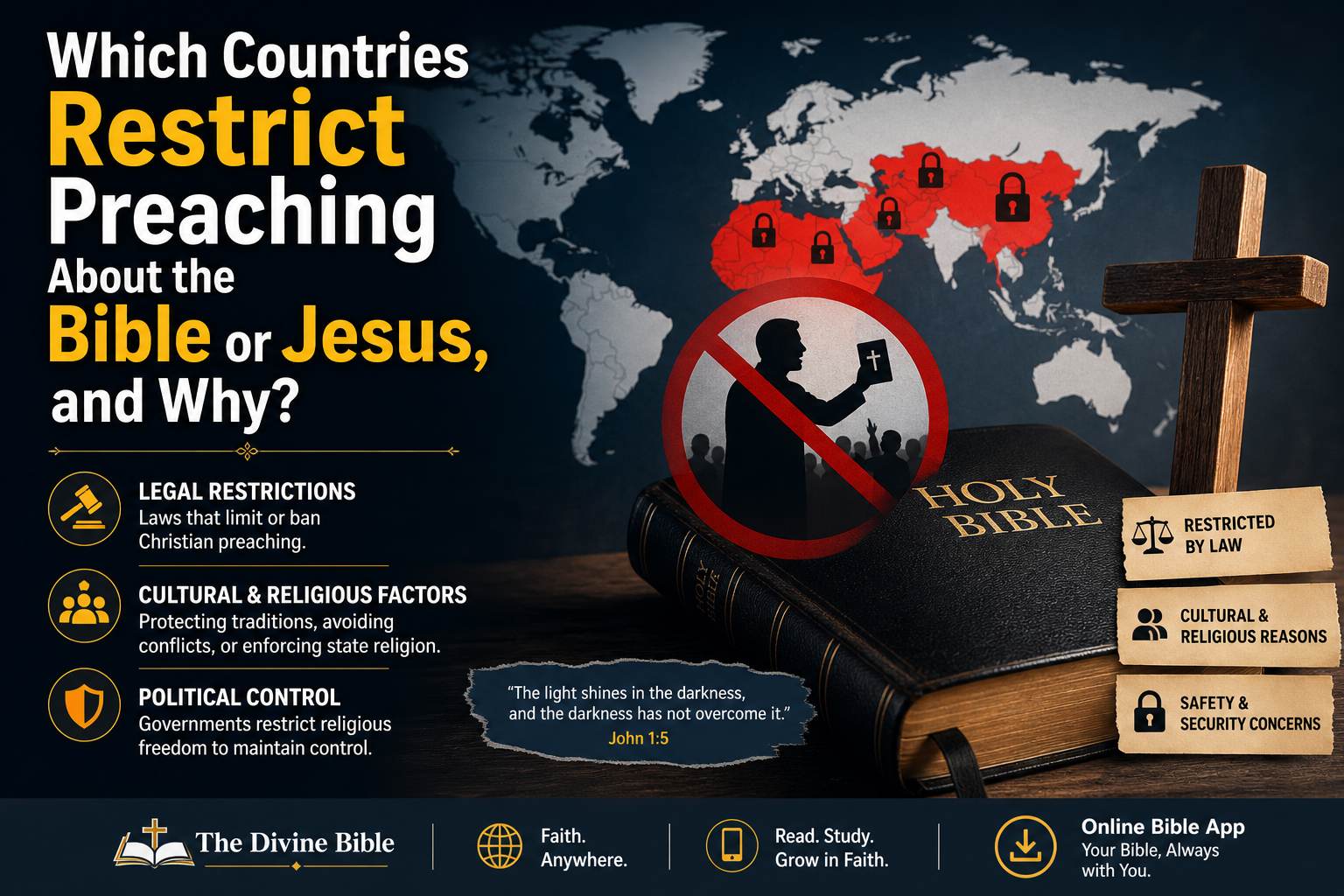
Religious freedom varies widely across the world, and while many countries allow open expression of faith, others place restrictions on religious practices. In some regions, preaching about Christianity or distributing religious material like the Bible can be limited or controlled by law. Discussions around bible banned countries often arise when people explore global differences in religious freedom and legal systems.
In certain nations, restrictions are not always about banning the Bible itself but about regulating public preaching, conversion activities, or distribution of religious materials. These limitations are often influenced by political structures, cultural traditions, or dominant religions within those countries. Governments may enforce such rules to maintain social harmony, avoid religious conflicts, or protect national identity.
For example, in some Middle Eastern countries where Islam is the official religion, public preaching of other religions is restricted. Countries like Saudi Arabia have strict regulations on public religious expression outside of Islam. While private worship may be allowed to some extent, public gatherings, evangelism, or distribution of non-Islamic religious texts can be prohibited. These laws are deeply connected to religious and cultural frameworks that shape governance.
Similarly, in countries like North Korea, religious activities of any kind are tightly controlled. The government maintains strict authority over all forms of expression, including religion. Independent religious practices, including Christianity, are often not permitted. The restrictions here are more political, as the state prioritizes control over ideology and public influence.
In parts of Asia, such as China, religious practices are regulated by the government. While Christianity is recognized, activities must occur within state-approved organizations. Unauthorized preaching or distribution of religious materials can lead to legal consequences. Despite these regulations, many individuals continue to practice their faith within approved systems or private settings.
Technology has also played a role in how people access religious content. Even in regions with restrictions, individuals may turn to digital platforms, such as an online Bible app, to read and study scriptures privately. These tools provide accessibility while helping users maintain discretion in environments where public expression may be limited.
In some countries, restrictions are tied to anti-conversion laws. Nations like India have certain regional laws that regulate religious conversion, aiming to prevent forced or deceptive practices. While preaching itself may not be banned, activities perceived as influencing conversion can face scrutiny under local regulations.
It’s important to understand that these restrictions are often complex and vary not only by country but also by region within a country. Cultural sensitivity, historical context, and political priorities all play a role in shaping these laws. While some governments emphasize religious freedom, others prioritize social stability or national identity, leading to varying degrees of regulation.
Organizations and communities continue to advocate for freedom of belief and expression around the world. Platforms like The Divine Bible aim to support individuals by providing accessible and respectful ways to engage with scripture, regardless of geographical limitations.