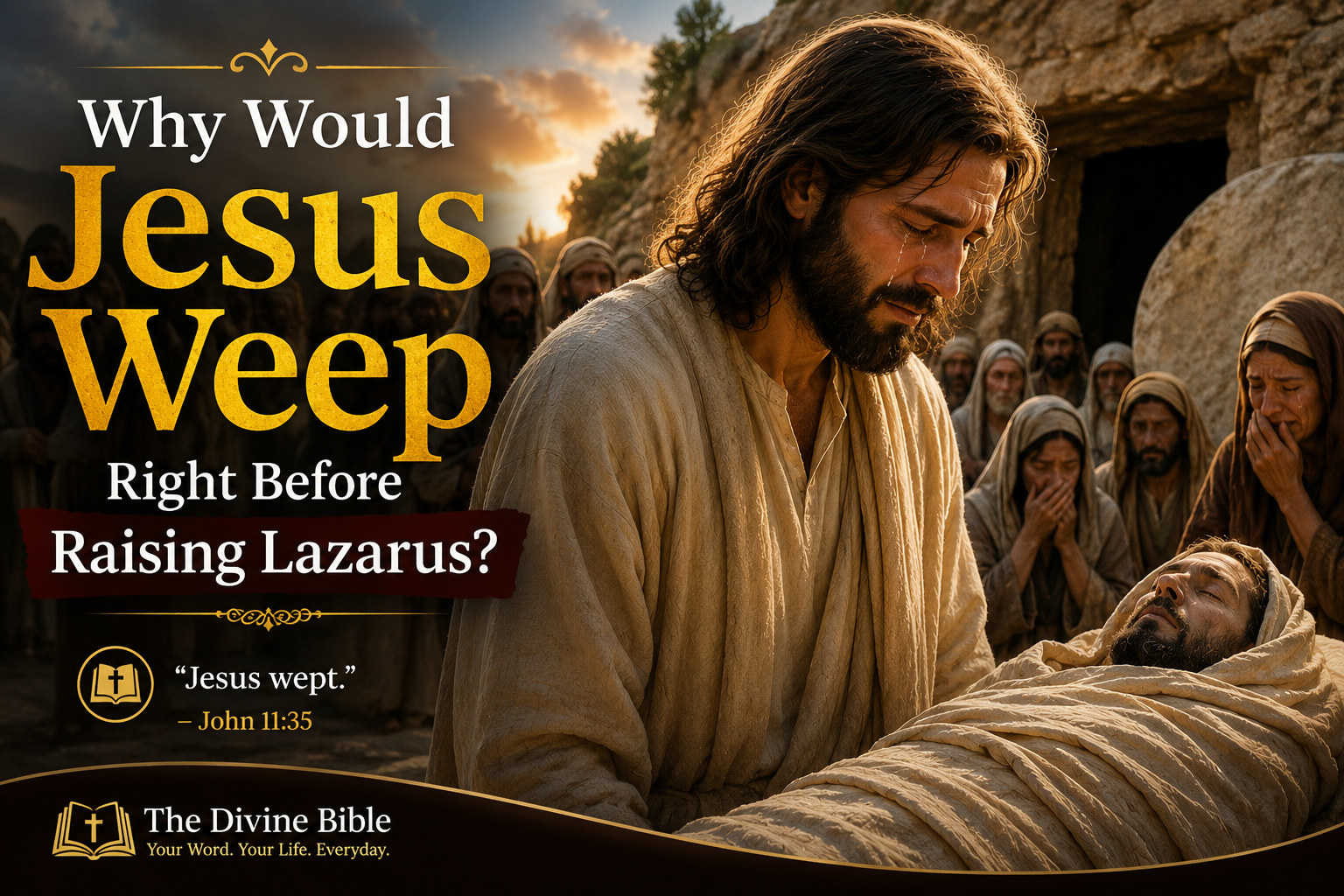
The story of Lazarus in John 11 is one of the most emotional moments in the life of Jesus. It shows His compassion, humanity, and divine power. For readers using an English Bible app, this passage offers a deeper understanding of Jesus’ character and His response to human suffering.
Lazarus, the brother of Mary and Martha, became seriously ill. When Jesus arrived in Bethany, Lazarus had already been in the tomb for four days. Martha and Mary were grieving, and many people around them were mourning his death. Jesus knew what He was about to do—He was going to call Lazarus back to life. Yet, when He saw the people weeping, Jesus Himself became deeply troubled.
Why Did Jesus Weep?
One of the most common questions readers ask is, why did Jesus weep if He already knew that Lazarus would soon be alive again? His tears reveal something important. Jesus was not distant from human pain. He entered into the sorrow of the people around Him and felt the weight of their grief.
Jesus’ tears also show His genuine love for Lazarus and his family. The Gospel says, “Jesus wept” (John 11:35), one of the shortest and most powerful verses in the Bible. His reaction reminds us that grief is not a sign of weak faith. Even when we trust God, we can still experience sadness and loss.
There is also a deeper meaning behind Jesus’ sorrow. Death was never presented as God’s final intention for humanity. Sin and death had brought suffering into the world, and Jesus was standing directly in front of that reality. His grief can therefore be understood as a response not only to Lazarus’ death but also to the brokenness and pain caused by death itself.
Jesus’ Compassion and Power
The story beautifully brings together two sides of Jesus. He is compassionate enough to cry with those who are hurting, yet powerful enough to command death to release Lazarus.
Jesus eventually went to the tomb and asked for the stone to be removed. He prayed to the Father and then called, “Lazarus, come out!” Lazarus came out of the tomb, still wrapped in his burial clothes. It was an extraordinary miracle that demonstrated Jesus’ authority over death.
The miracle also pointed toward an even greater promise. Jesus told Martha, “I am the resurrection and the life” (John 11:25). His words point beyond Lazarus’ temporary return to life and toward the Christian hope of resurrection and eternal life.
What Can We Learn Today?
The story of Jesus and Lazarus reminds us that God understands our pain. When we experience loss, disappointment, or uncertainty, we do not have to hide our emotions from Him.
Jesus’ tears show that compassion matters. His miracle shows that our circumstances are not beyond God’s power. Together, these moments encourage believers to grieve honestly while continuing to hold onto hope.
For readers of the divine Bible, John 11 is a powerful reminder that Jesus is both compassionate toward our suffering and the source of hope beyond death.