


Let’s explore what Scripture tells us and why this phrase matters so much for believers today.
How Many Times Is the Phrase Mentioned?
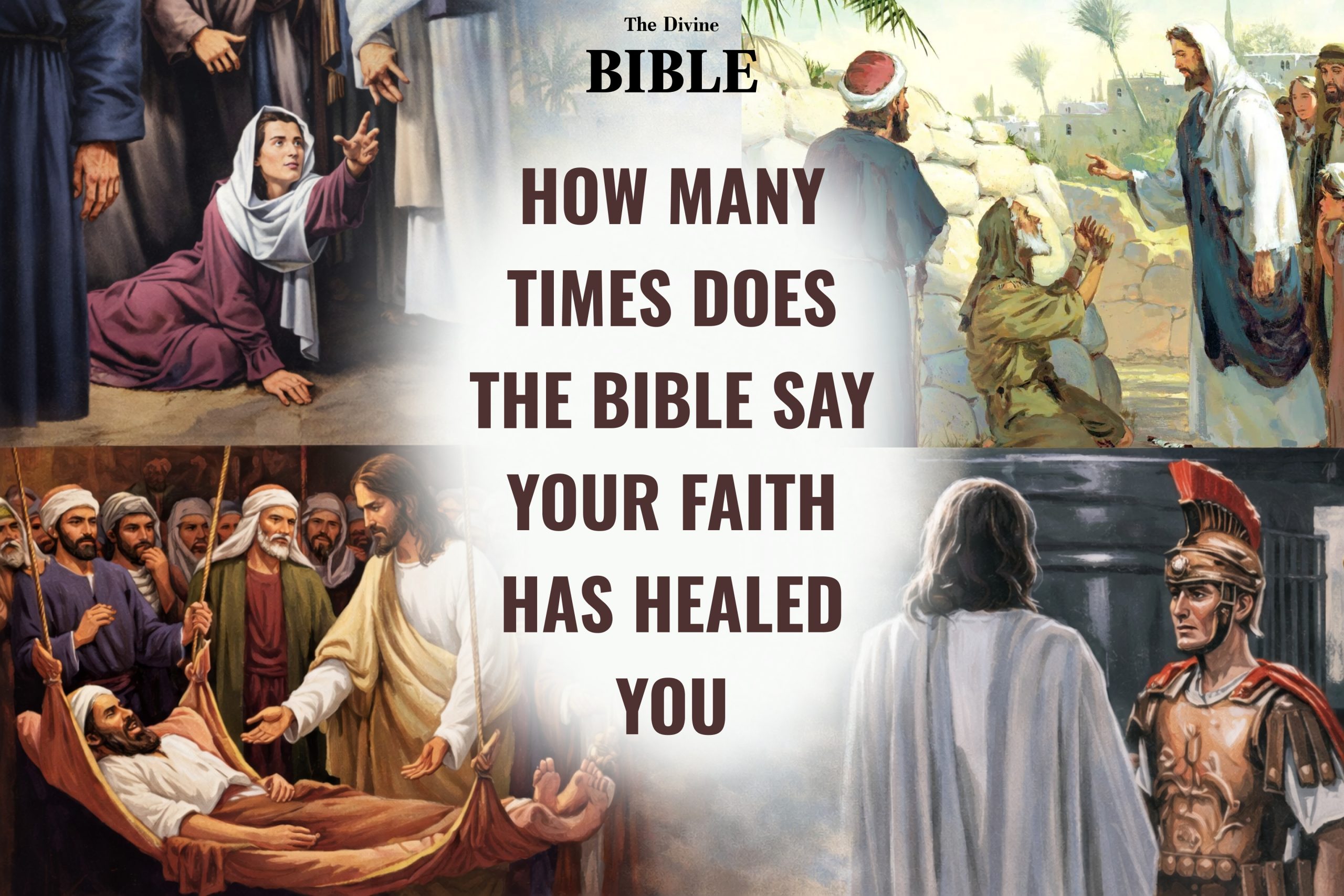
In the New Testament, Jesus says some version of “your faith has healed you” or “your faith has made you well” at least five distinct times in the Gospels. While the exact wording varies slightly depending on translation, the meaning remains consistent.
Here are the key moments:
The Woman with the Issue of Blood (Matthew 9:22, Mark 5:34, Luke 8:48)
A woman suffering for twelve years touches Jesus’ garment in faith. Jesus responds, “Daughter, your faith has healed you.” Her healing wasn’t random—it was rooted in trust.
Two Blind Men (Matthew 9:29–30)
The Sinful Woman Who Anointed Jesus’ Feet (Luke 7:50)
Blind Bartimaeus (Mark 10:52; Luke 18:42)
While some of these accounts appear in multiple Gospels, they refer to the same events. So the phrase is spoken in at least five separate healing situations.
What Does “Your Faith Has Healed You” Really Mean?
It’s important to understand that Jesus was not suggesting that faith is a magical force. Instead, faith represents trust—complete confidence in God’s power and goodness.
In each case:
The person believed Jesus could help.
They acted on that belief.
Jesus responded with compassion.
Faith was the connection point between human need and divine power.
Physical and Spiritual Healing
Another key insight is that healing in the Bible isn’t always just physical.
In some cases, such as the sinful woman in Luke 7, the healing was spiritual—freedom from guilt and shame. This reminds us that God’s restoration goes beyond the body. It touches the heart, mind, and soul.
Studying these passages through a Christian Bible study website can help believers better understand the deeper meaning behind Jesus’ words. Context always matters when interpreting Scripture.
Why Didn’t Jesus Heal Everyone This Way?
You might wonder: if faith brings healing, does that mean lack of healing equals lack of faith?
The Bible shows that this is not a simple formula. While faith plays an important role, healing ultimately depends on God’s will and purpose. The Apostle Paul, for example, prayed for his “thorn in the flesh” to be removed, yet God chose to give him grace instead (2 Corinthians 12:9).
Faith is about trust in God’s plan—not just expecting a specific outcome.
Lessons for Believers Today
So what can we learn from these five powerful moments?
Faith requires action.
The woman reached out. Bartimaeus cried out. Faith moves.
Faith is personal.
Jesus addressed individuals directly: “Your faith.” It wasn’t about the crowd—it was about personal trust.
Faith brings peace.
In several cases, Jesus says, “Go in peace.” Healing isn’t just physical relief—it’s inner restoration.
Gratitude matters.
Only one leper returned to say thank you. Faith grows when paired with gratitude.
These lessons remain relevant today. Whether facing illness, emotional pain, or spiritual struggle, believers are encouraged to approach God with confidence and trust.
Growing Your Faith Through Study
Understanding how often Jesus said, “Your faith has healed you,” can deepen your appreciation for the power of belief in Scripture. Regular Bible study strengthens faith and helps believers apply these lessons in everyday life.
Using a free Bible study app can make it easier to explore these passages anytime, anywhere. Tools that offer devotionals, commentary, and reading plans help bring clarity and structure to your spiritual journey.
Platforms like The Divine Bible also provide access to a Christian Bible study website experience, where users can explore Scripture in depth, reflect on key themes, and grow spiritually through guided learning.
Final Thoughts
The phrase “your faith has healed you” appears in at least five powerful moments in the Gospels, each revealing the deep connection between trust and transformation. Whether the healing was physical, emotional, or spiritual, Jesus consistently honored sincere faith.
These passages remind us that faith is not about perfection—it’s about trust. When we reach out to God with genuine belief, we open the door for His peace, grace, and restoration to work in our lives.
And as we continue to study Scripture and grow in understanding, our faith—just like those in the Gospels—can become stronger each day.