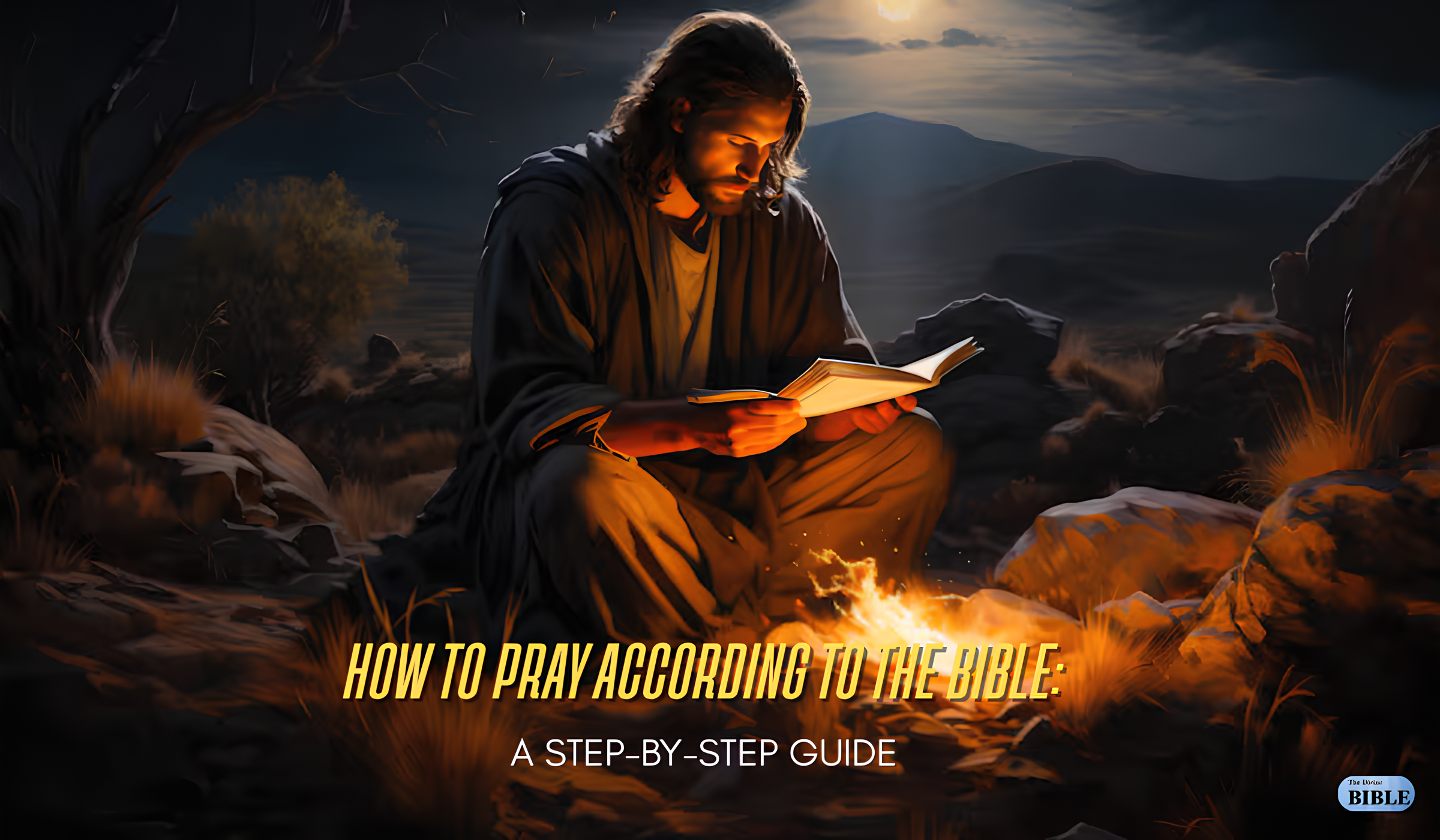
If you’ve ever wondered what is the right way to pray, you are not alone. Prayer is one of the most personal yet universal manifestations of faith. Yet, there still exist some Christians who are unsure about what to say, how to begin, or whether their prayers are being heard. The good news? The Bible provides us with a powerful, practical, and deeply intimate roadmap for prayer.
This Bible guide takes you step-by-step on how to apply Bible teachings to prayer, whether you’re a seasoned believer or seeking a fresher connection with God.
Step 1: Approach God With Reverence
Stop and think before saying a word.
Scripture tells us to come into God’s presence in humility and with awe, praying, “Our Father in heaven, hallowed be Your name.” (Matthew 6:9) That sets the tone for all prayer. Recognize who you are speaking to: the Creator of heaven and earth, the King of kings. This isn’t just a habit. It’s a holy moment.
Prayer Tip of the Day: Begin your prayer by focusing on God’s character. Use names of God that are meaningful to you: Jehovah Jireh (Provider), Elohim (Creator), Abba (Father).
Step 2: Be Honest and Speak From the Heart
God is not impressed with flowery language or a long speech. What God wants is a sincere heart.
In Psalm 62:8, we find encouragement to “pour out your heart before Him.” Speak to God, telling Him what is really on your mind, our heart-joy, sadness, confusion, gratitude; He wants it all. Jesus Himself prayed in agony in the Garden of Gethsemane, showing us that raw emotion is welcome at God’s feet.
Pro Tip: Use a Bible app for Android or iOS, like The Divine Bible App, to journal your prayers and reflect on your journey. It’s one of the best free Bible apps for beginners with built-in devotionals and prayer prompts.
Step 3: Confess and Receive Forgiveness
One powerful truth of Christian prayer is this: You don’t have to clean yourself up before you come to God, but confession clears the path to closeness.
“If we confess our sins, He is faithful and just to forgive us…” (1 John 1:9)
Take a moment to reflect on where you’ve missed the mark. Ask for forgiveness with sincerity. Then, don’t forget this: receive His grace. Don’t walk away in guilt; walk away in freedom.
Reminder: This is not about shame. It’s about realignment. Just like a loving parent forgives a child, God welcomes you back with open arms.
Step 4: Ask Boldly According to His Will
Yes, ask for what’s on your heart, your dreams, needs, and desires. The Bible states, “You do not have because you do not ask God.” (James 4:2)
But go a step further and ask for things in agreement with His will. Pray as Jesus did: “Not my will, but Yours be done.” (Luke 22:42) It requires trust, and this trust shifts prayers from wish lists to worship.
Helpful Tool: Use a study Bible app (free download) to look up scriptures tied to your prayer needs, whether it’s healing, wisdom, or peace.
Step 5: Listen, Reflect, and Rest
Prayer isn’t a monologue; it’s a conversation.
After you’ve spoken, take a moment of silence. Open your heart to the Holy Spirit. Sometimes God speaks through Scripture, sometimes through a profound sense of peace. It is in this waiting and listening that prayer gains its true power and that we hear.
Try This: The Divine Bible App of today includes spontaneous prayer to the Holy Spirit, allowing you to pause and meditate on how God responds to you. It is rated among the best devotion apps for Christians in 2025 and is built for real, reflective faith.
Why This Matters More Than Ever
Prayer is still grounded in an age of noise, instant gratification, and digital overload. It grounds us. It heals us. It brings us back to the center, God.
Whether you’re praying for your family, seeking healing, or simply expressing gratitude, daily prayer has the power to transform your mindset, relationships, and life direction.
Final Thoughts: Start Small, Stay Consistent
Don’t wait for the perfect moment. Start now.
Whether it’s one minute or ten, God values your presence more than your performance. Let your prayer life be a daily rhythm, not a religious ritual. And if you’re looking for guidance, accountability, or Scripture-based structure, download a Bible app for Android or iOS that helps you stay connected.
The Divine Bible App offers everything from daily prayers for God, study plans, and life-changing Bible lessons, all in one easy-to-use tool. It’s the perfect companion to deepen your walk in faith, especially if you’re just beginning.
FAQs
What does the Bible say about how to pray?
The Bible encourages believers to pray with sincerity, humility, and faith. Jesus provides a model in Matthew 6:9-13, known as the Lord’s Prayer, outlining how to approach God in reverence, submission, and trust.
Is there a correct position or posture for prayer?
There is no single correct posture. In the Bible, people prayed while standing, kneeling, with hands raised, or even lying on their faces. The most important thing is the reflection of the soul, praying with sincerity and devotion.
Can I pray silently, or does it have to be spoken aloud?
Both are acceptable. God hears both silent and spoken prayers. Hannah, in 1 Samuel, prayed silently, and God answered her. Whether whispered or just felt, God knows your heart.
How often should I pray according to the Bible?
1 Thessalonians 5:17 says, “Pray without ceasing.” Though this does not mean constant talking, it encourages a continual awareness of God, inviting Him into every part of your life, every day.
What if I don’t know what to say in prayer?
Romans 8:26 tells us that the Holy Spirit helps us when we don’t know what to pray for. Start with honesty, thank God, confess, ask for help, or simply sit in His presence. The Divine Bible App can also guide you with daily prayer prompts and devotionals.