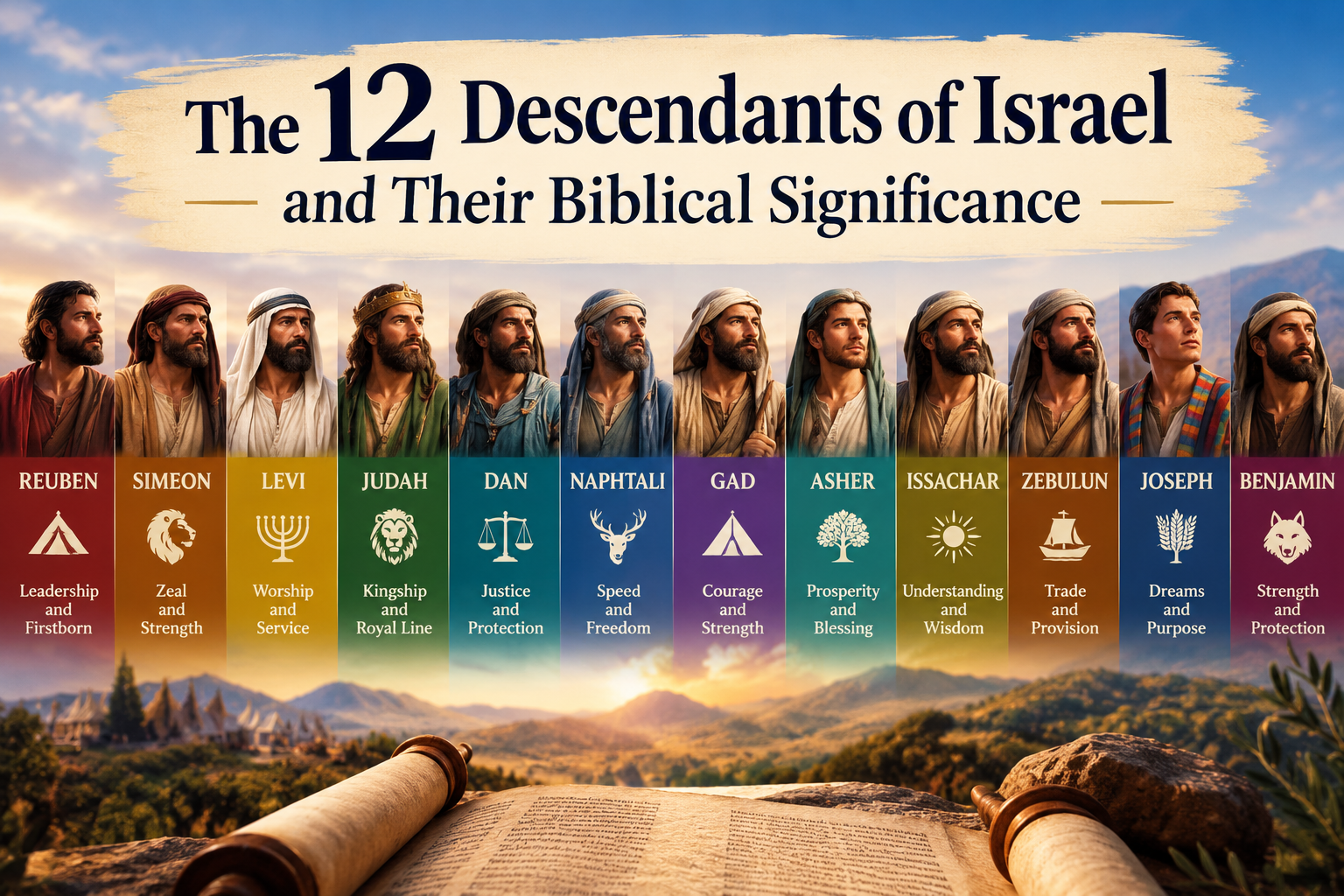
The story of Israel’s descendants is one of the most important parts of the Old Testament. Israel, whose name was given to Jacob, became the father of twelve sons. These sons became the ancestors of the 12 descendants of Israel, traditionally understood through the twelve tribes that played a major role in biblical history.
For anyone who wants to explore these stories more closely, a free Bible app can be a convenient way to read the Scriptures, compare passages, and learn about the people and events connected to Israel’s family.
Who Were the Twelve Sons of Israel?
Jacob, also called Israel, had twelve sons whose families developed into the twelve tribes of Israel. Their names were Reuben, Simeon, Levi, Judah, Dan, Naphtali, Gad, Asher, Issachar, Zebulun, Joseph, and Benjamin.
Each son had a unique place in the biblical story. Their descendants eventually became tribes with different histories, territories, and responsibilities among the people of Israel.
1. Reuben
Reuben was Jacob’s firstborn son. Although he held the position of the eldest, his actions affected his standing within the family. His descendants became the tribe of Reuben.
2. Simeon
Simeon was Jacob’s second son. His descendants formed the tribe of Simeon, which eventually lived within the territory associated with Judah.
3. Levi
Levi became especially significant because his descendants were set apart for religious service. The Levites served in roles connected with worship and the tabernacle and later the temple.
4. Judah
Judah became one of the most prominent tribes. King David came from Judah, and the New Testament traces Jesus’ human lineage through this tribe.
5. Dan
Dan was one of Jacob’s sons through Bilhah. His descendants formed the tribe of Dan, which became associated with territory in the northern part of Israel.
6. Naphtali
Naphtali was another son of Bilhah. His descendants became the tribe of Naphtali and settled in the northern region of the Promised Land.
7. Gad
Gad was the son of Jacob and Zilpah. The tribe of Gad received land east of the Jordan River.
8. Asher
Asher was also the son of Zilpah. His descendants became known as the tribe of Asher and settled in an area connected with the northern part of Canaan.
9. Issachar
Issachar was Jacob’s son through Leah. His descendants formed the tribe of Issachar, which received territory in the land of Israel.
10. Zebulun
Zebulun was another son of Leah. His tribe settled in an area of northern Israel and is mentioned in several important biblical passages.
11. Joseph
Joseph’s story is one of the most memorable in Genesis. He became a powerful leader in Egypt and helped preserve his family during a severe famine. Joseph’s two sons, Ephraim and Manasseh, later received tribal inheritances.
12. Benjamin
Benjamin was Jacob’s youngest son and Joseph’s full brother. The tribe of Benjamin produced important biblical figures, including King Saul and, later, the apostle Paul.
Why Are the Twelve Tribes Important?
The 12 Descendants of Israel represent more than a family tree. Their descendants became the tribes through which the nation of Israel developed. Their stories reveal themes of faith, family conflict, forgiveness, leadership, promise, and God’s faithfulness.
The story also reminds readers that God can work through imperfect families and complicated circumstances. From Abraham, Isaac, and Jacob to the generations that followed, the biblical narrative connects individual lives to a much larger story of covenant and purpose.
For Christians and Bible readers today, studying these twelve sons can provide useful background for understanding many Old and New Testament passages. The Divine Bible makes Scripture more accessible for people who want to explore these stories, characters, and lessons as part of their regular Bible reading.