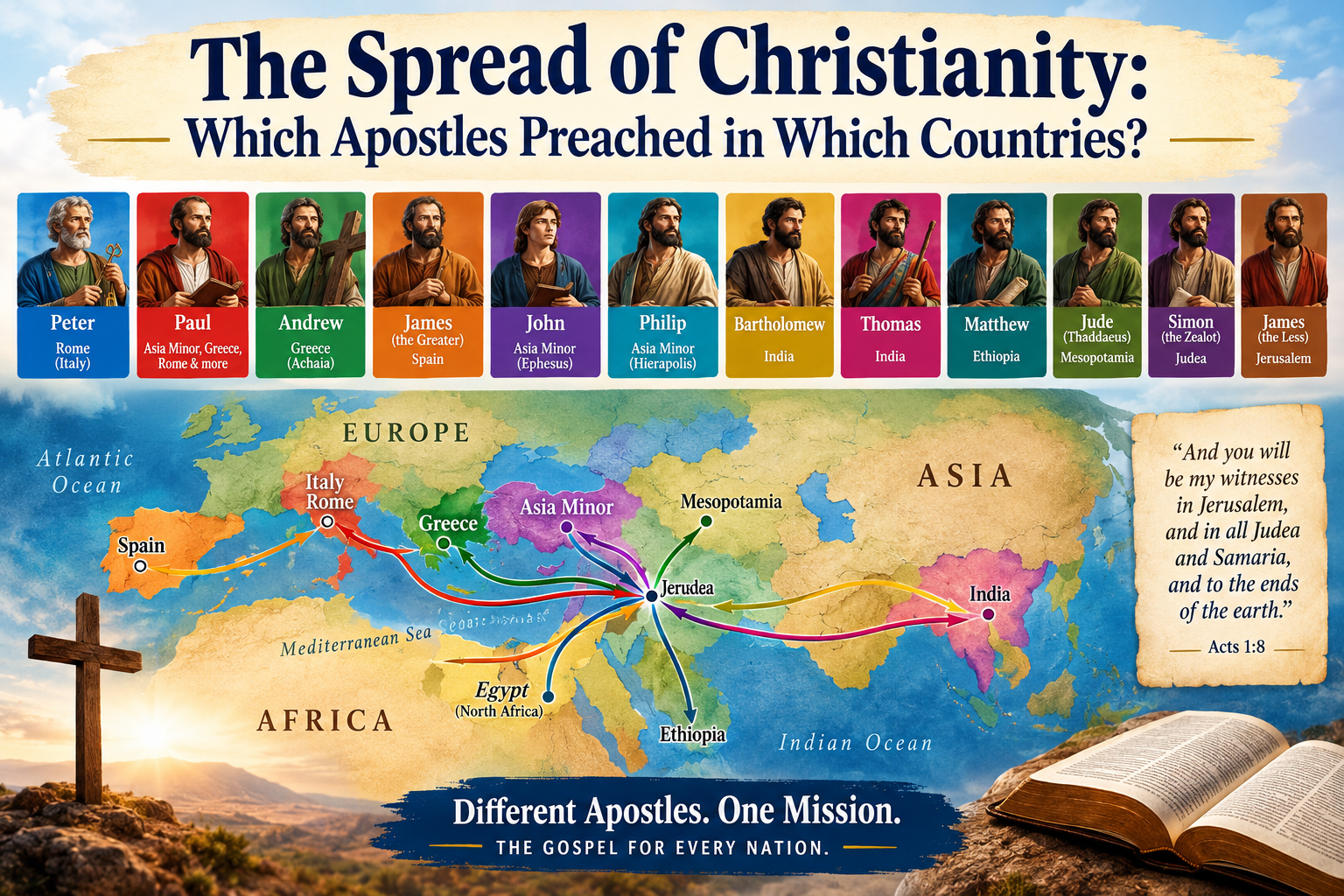
Christianity began in the first century AD with the life, ministry, death, and resurrection of Jesus Christ. After His resurrection, Jesus instructed His followers to take His message to people beyond Jerusalem and Judea. The apostles and early Christian missionaries traveled through different regions, sharing the Gospel and establishing communities of believers.
Today, people can explore the teachings of Jesus and the early church through resources such as a holy Bible app. The New Testament, especially the Book of Acts, provides important information about the apostles, their preaching, and the growth of the first Christian communities.
How Did Christianity Begin to Spread?
Around AD 30–33, the apostles began publicly preaching in Jerusalem after the coming of the Holy Spirit at Pentecost. Peter became one of the prominent voices of the early church, and thousands of people heard the Christian message. As persecution increased, believers moved into other areas, helping the message reach new communities.
The spread of Christianity continued throughout the first century as apostles and missionaries traveled along major roads and trade routes of the Roman Empire. Cities in Judea, Syria, Asia Minor, Greece, and Italy became important centers of early Christianity.
Apostles Preached in Which Countries and Regions?
The exact journeys of some apostles are uncertain because the New Testament does not record all of their activities after the early chapters of Acts. Some locations are based on early Christian traditions.
Peter — Judea, Samaria, Antioch, and Rome: Peter preached in Jerusalem and surrounding areas beginning around AD 30. Early Christian tradition later connects him with Antioch and Rome. He is traditionally believed to have been martyred in Rome around AD 64–67.
Andrew—Greece and the Black Sea region: Tradition connects Andrew with missionary work in Greece and areas around the Black Sea during the 1st century AD.
James the Greater—Judea and Spain: James preached in the early Christian community in Judea. A later tradition connects him with Spain. He was martyred around AD 44.
John—Judea and Asia Minor: John is traditionally associated with Ephesus, in modern-day Turkey, and the surrounding region. He is also connected with Patmos, where the Book of Revelation was traditionally written around AD 95.
Thomas—India: According to long-standing Indian Christian tradition, Thomas arrived on the Malabar Coast of India around AD 52. He is traditionally believed to have preached to local communities and died as a martyr around AD 72.
Philip—Phrygia: Philip is traditionally associated with Phrygia, an ancient region in modern-day Turkey, during the 1st century AD.
Bartholomew—Armenia and surrounding regions: Christian traditions connect Bartholomew with Armenia, Mesopotamia, and other eastern regions. Some traditions also associate him with India.
Matthew—Eastern regions: Different traditions place Matthew’s missionary activity in Ethiopia or regions east of the Roman Empire, although the historical evidence is limited.
Jude (Thaddeus)—Syria and Mesopotamia: Jude is traditionally associated with missionary work in Syria and Mesopotamia during the 1st century AD.
Simon the Zealot — Egypt, Syria, and Persia: Later traditions connect Simon with several eastern regions, including Egypt, Syria, and Persia, although details are uncertain.
Paul and the Expansion of Christianity
Although Paul was not one of the original Twelve Apostles, he became one of the most influential missionaries in Christian history. His missionary journeys took place mainly between approximately AD 46 and 60.
Paul traveled through Asia Minor, Macedonia, Greece, and eventually Rome. He preached in cities including Philippi, Thessalonica, Corinth, Ephesus, and Rome. His letters to early Christian communities later became important books of the New Testament.
Christianity Reaches the Wider World
By the 2nd and 3rd centuries AD, Christian communities existed across much of the Roman Empire, including parts of Europe, North Africa, the Middle East, and Asia. In AD 313, Emperor Constantine issued the Edict of Milan, allowing Christianity to be practiced openly within the Roman Empire.
The history of Christianity’s expansion is a story of missionaries, local communities, faith, and perseverance. While some apostolic journeys are firmly documented and others rely on ancient traditions, their combined legacy helped carry the message of Jesus from Jerusalem to many parts of the ancient world.
For anyone interested in understanding this history through Scripture, The Divine Bible offers a convenient way to read the Bible and explore the teachings, journeys, and events that shaped the early Christian faith.