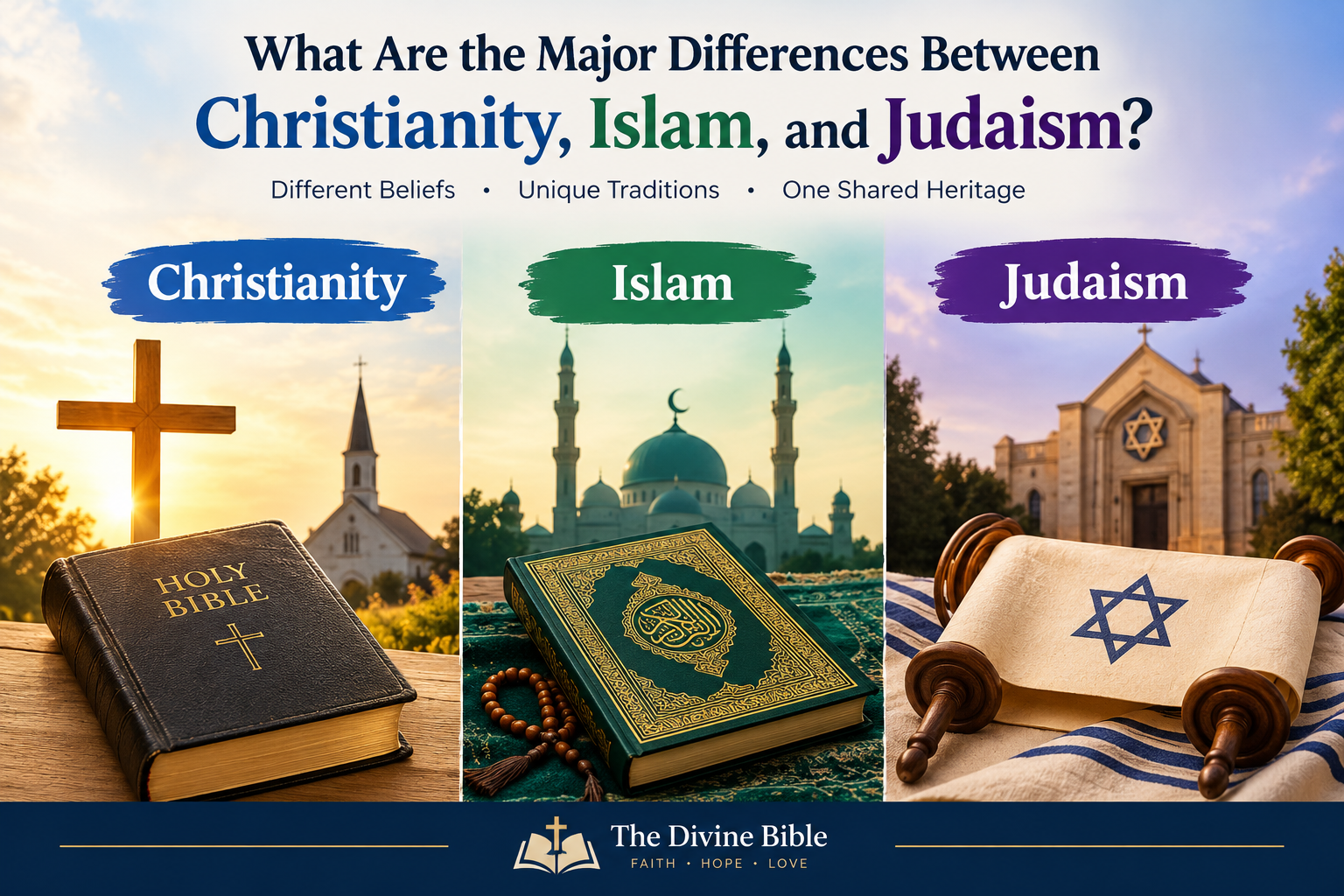
When exploring what are the differences between Christianity, Islam, and Judaism, it is helpful to understand their beliefs about God, their sacred scriptures, their prophets, and their views on Jesus Christ. Learning about these religions can help people appreciate their similarities, understand their differences, and develop greater respect for different faith traditions.
1. Beliefs About God
Christianity, Islam, and Judaism all emphasize the importance of God, but they understand God’s nature differently.
Christianity teaches that there is one God who exists as the Father, the Son, and the Holy Spirit. This belief is known as the Holy Trinity. Christians believe Jesus Christ is the Son of God and the Savior of humanity.
Islam teaches that there is only one God, Allah, who has no partners or equals. Muslims believe in the absolute oneness of God, known as Tawhid. They consider associating partners with God incompatible with Islamic faith.
Judaism also emphasizes belief in one God who is eternal, indivisible, and the creator of the universe. Jewish faith centers on worshiping God and following the commandments and teachings found in Jewish tradition.
2. Views About Jesus Christ
One of the most significant differences among these religions concerns the identity and role of Jesus.
In Christianity, Jesus Christ is central to the faith. Christians believe He is the Son of God, that He died for humanity’s sins, and that He rose from the dead. His life and teachings form the foundation of Christian belief.
In Islam, Jesus, known as Isa in Arabic, is honored as a major prophet and the Messiah. Muslims believe in His miraculous birth and respect His teachings. However, Islam does not accept Jesus as God or the Son of God in the Christian sense.
In Judaism, Jesus is not recognized as the Messiah or as divine. Jewish beliefs about the Messiah differ from Christian teachings, and Judaism continues to await the fulfillment of its traditional messianic expectations.
3. Sacred Scriptures
Each religion has its own sacred texts that guide believers in faith, worship, and everyday life.
Christianity: The Bible, consisting of the Old Testament and the New Testament, is the central sacred scripture. It includes accounts of Jesus’ life, His teachings, and the beginnings of the Christian church.
Islam: The Quran is considered the word of God revealed to Prophet Muhammad. Muslims also look to the Hadith, which records the sayings and actions attributed to Muhammad.
Judaism: The Torah is central to Jewish religious life. The Tanakh contains the Torah, the Prophets, and other sacred writings. The Talmud is also an important source of Jewish religious discussion and interpretation.
Although these scriptures have different roles and interpretations, they address important questions about faith, morality, worship, and humanity’s relationship with God.
4. Religious Practices and Worship
Christian, Muslim, and Jewish communities have different ways of expressing their faith.
Christians commonly gather in churches for worship, prayer, Bible readings, and communion, depending on their denomination. Christmas and Easter are among the most widely celebrated Christian holidays.
Muslims gather in mosques for prayer and perform five daily prayers. Ramadan, a month of fasting, reflection, and charity, is one of the most important periods in Islam. Eid al-Fitr and Eid al-Adha are major Muslim celebrations.
Jewish worship takes place in synagogues and at home. Shabbat, observed from Friday evening to Saturday evening, is a central weekly time for rest and worship. Passover, Rosh Hashanah, and Yom Kippur are important Jewish observances.
5. What Do These Three Religions Have in Common?
Despite their differences, Christianity, Islam, and Judaism share several important characteristics. All three trace significant parts of their religious heritage to Abraham and are often called the Abrahamic religions.
They emphasize prayer, charity, moral responsibility, and the importance of living according to God’s guidance. They also teach respect for family and encourage people to consider their responsibilities toward others, although their specific teachings and interpretations vary.
Conclusion
Understanding the differences between Christianity, Islam, and Judaism helps us appreciate how these three influential religions shape the lives of their followers. Their beliefs about Jesus, sacred scriptures, and religious practices distinguish them, while their shared Abrahamic heritage creates meaningful historical connections.
At The Divine Bible, exploring religious teachings and biblical stories can help readers deepen their understanding of Christianity and discover the spiritual lessons found in the Bible. By learning about different faith traditions with an open mind, we can encourage meaningful conversations, mutual respect, and a greater appreciation of the world’s religious diversity.